
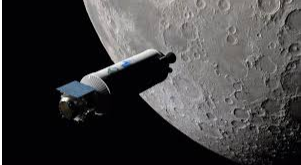
NASA, also known as the National Aeronautics and Space Administration, is scheduling another flight test to the moon for the first time in nearly 50 years. Since then, they have decided to upgrade and improve the technology to have a chance like this.
There will be four astronauts on board, making them a crew. This will be a change from the last test flight, as they had no one on board. Reid Wiseman is the commander of the team, and he is responsible for the crew, mission success, and the safety of the team. Victor Glover is the Pilot of the team, who will be navigating and monitoring the spacecraft. Christina Koch and Jermy Hansen will be the mission specialists managing specific payload operations, scientific experiments, and, if necessary, spacewalks.
The Artemis II mission will, as said before, send people to the moon to spend a short period of time in lunar orbit. On the mission, Christina Koch will become the first woman to travel to the moon, and Victor Glover will become the first person of color to do so. They will be helping prepare for future missions to Mars.
Artemis uses new technology, including the Space Launch System rocket and the Orion spacecraft, to send astronauts farther into space than ever before. Unlike the Apollo missions, Artemis is focused not just on visiting the moon, but also on building a long-term presence there to learn what it would be like to live on the moon. “Seeing the first woman and person of color stepping on the moon is a big step for the future ahead,” – Said Andrew Flores, a Sophomore at Los Altos
New technologies are being used and tested during this mission to make space travel safer and to soon build up a mission to Mars. The Space Launch System is tested to be NASA’s most powerful rocket ever, checking how it preforms duing launch and flight. The Orion spacecraft is tested for its life support systems, navigation, communication, and heat shields that protect astronauts when re entering earths atmosphere at very high speeds. “By testing new spacesuits and other things, Artemis helps NASA learn how humans can live and work on the Moon in the future,” – Said Noah Gonzales, a sophomore at Los ltos
It took almost 50 years for NASA to return to the moon because of a mix of money, technology, and safety concerns. With other programs getting more focus, the price of sending people to the moon made it take a bit longer. Safety is also another priority that NASA wants to spend additional time improving before sending astronauts back into deep space.