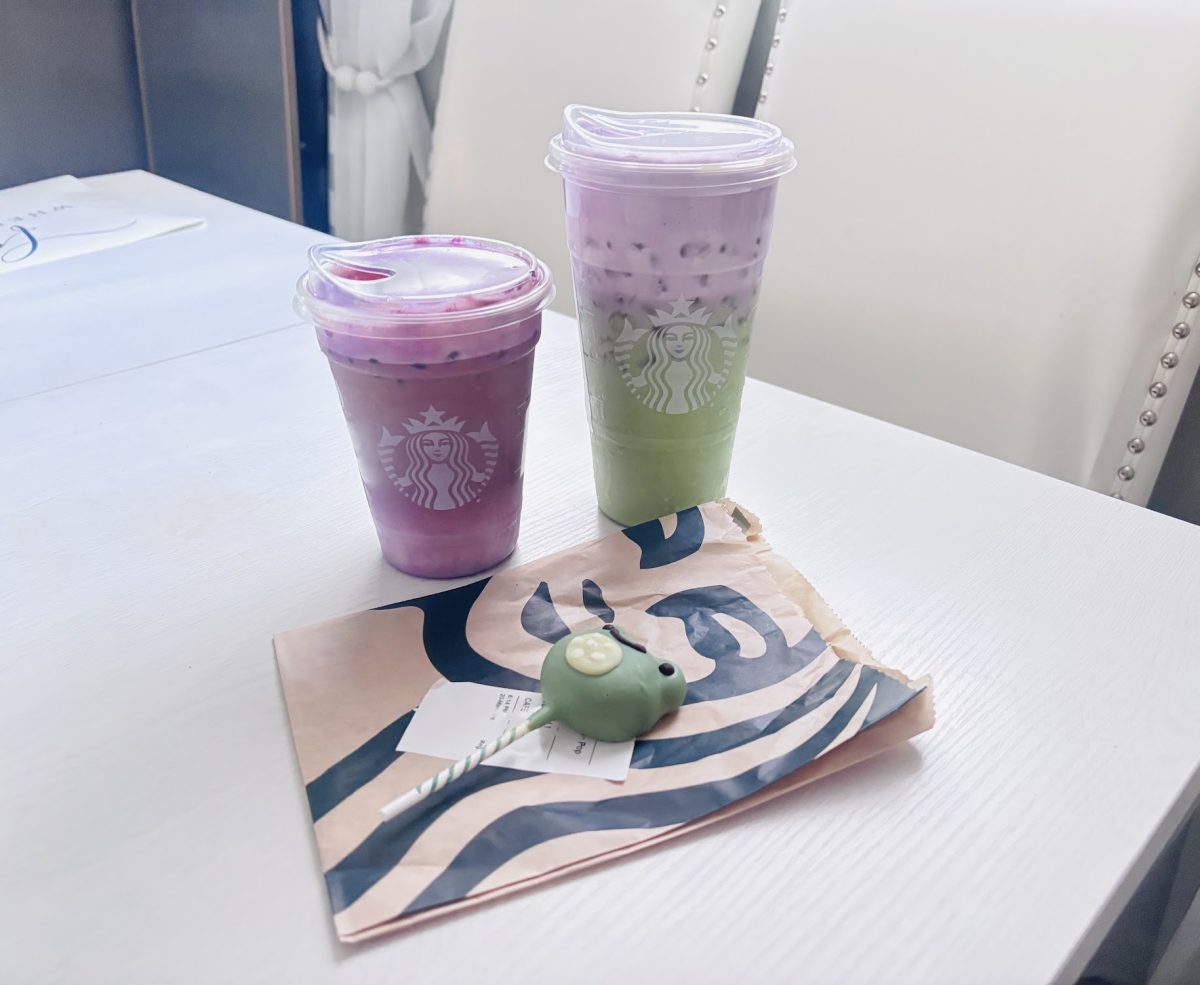
Starbucks’s 2026 spring menu introduces a range of creative drinks, but one item in
particular stands out for more than just its flavor. The new Iced Ube Coconut Macchiato reflects more diverse and culturally inspired ingredients being incorporated into mainstream menus.
While the new addition of ube is exciting, it also raises questions about how far major chains are willing to go when representing cultural food. Featuring one item is a step forward, but it can feel limited when there is potential that can stretch farther than a single drink.
“Ube is a purple yam commonly used in Filipino cuisine and desserts,” said junior Marcus Rosales. “I think fast food chains trying to incorporate more cultural diversity into their menus is great, it brings more outreach to our culture.”
Rosales said, “It’s honestly really cool to see them try to be more inclusive with their drinks and other menu items because I grew up eating ube desserts with my family, so seeing it in a drink like this is kind of unexpected but exciting at the same time”.
However, the excitement surrounding the drink also highlights a limitation in the menu. The ube flavor is only offered in a coffee-based drink, which may not appeal to everyone who is interested in trying it.
Junior Katalina Martinez said, “I’m glad to see Starbucks bringing more diverse inclusivity in their menus, but it’d be nice to see more ube items or even other culturally significant things”.
Others agree with the concept of adding different drinks to the menu of Starbucks; many think that adding non-caffeine, culturally inspired drinks would be a great addition while staying inclusive to everyone’s palette.
“The drink’s good, but not everyone likes coffee, so it would be cool if they made something like an ube Frappuccino or even an ube matcha,” said Rosales.
The return of the lavender matcha and new frog cakepops and other items on the spring menu have also gained attention.
“I thought the lavender matcha was actually really, really good, even though it’s from a fast food chain, which you usually don’t expect,” said Martinez. “It tasted fresh and not too artificial, it wasn’t even chalky, the matcha was pretty good quality.”
Overall, Starbucks is moving in the right direction by incorporating more diverse flavors into its menu. However, if the company wants to fully embrace the cultural inclusivity they are trying to reciprocate, they should expand beyond a single item and offer more variety for different preferences.
“… I’m not complaining because it tastes good,” said Rosales. “But if they drop an ube Frappuccino next, I’d probably be there every week.”